May is Wildfire Awareness MonthMay is Wildfire Awareness Month here in Colorado and across the nation, providing us all with an opportunity to better understand wildfire risk and prepare our homes and communities for potential wildfire impacts. In this newsletter, you'll find an update from the Louisville Fire Protection District, resources for wildfire preparedness, ways you can access funding to mitigate your risk at home, and updates on steps we're taking to increase our wildfire resilience as a community. 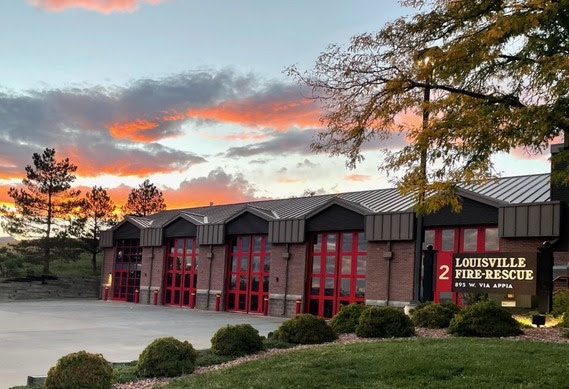 An update from Louisville Fire Protection DistrictSummer 2026 Fire Risk OutlookWildfire risk is expected to increase across the Front Range as we move into summer 2026. Colorado’s snowpack has dropped to less than 10% of average following several months of warmer and drier-than-normal conditions. Temperatures have averaged 5–10°F above normal, and precipitation over the past six months has been well below average. Drought conditions continue to expand and intensify, with no meaningful improvement expected through at least the end of June. Forecasts favor continued warmth and dryness into early summer. While some models hint at a possible monsoon later in the season, uncertainty remains high. In the near term, dry, dormant vegetation and spring cold fronts will keep fire potential elevated, with additional risk expected into June and July as vegetation dries out. So, what can you do to prepare for wildfires in these dry conditions? Maintain situational awareness and take action to protect yourself, your family, and your home. Sign up for emergency alerts, have an evacuation plan, and strictly follow all local burn restrictions. The Louisville Fire District will be upstaffing whenever possible during Red Flag Warning and Particularly Dangerous Situation (PDS) days. We are available to assist with home wildfire risk assessments and welcome questions from the community. We are actively collaborating with regional partners and stakeholders to be as prepared as possible. Did you know? The Louisville Fire Protection District provides free home assessments and community assessments. If you live in-district, you can schedule a free assessment by requesting one on our website, calling (303) 666-6595, or emailing RiskReduction@LouisvilleFire.com. Building wildfire preparedness is most successful when we're all working together and taking action as individuals to mitigate our homes and properties. Your efforts go further than you know! — Chief Kevin Milan, Louisville Fire Protection District |
|
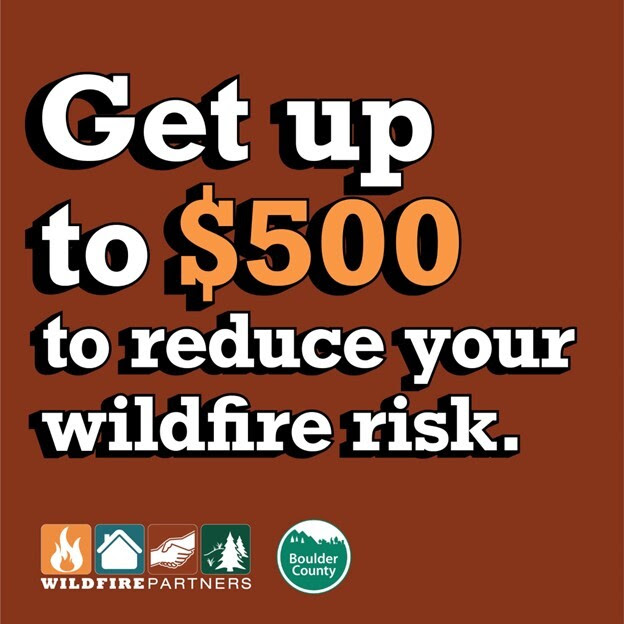 Wildfire Partners offering rebates all summerGet rebates for work you're already doing! Whether you're a homeowner, renter, or business owner, you could be eligible for rebates on mitigation work. This includes junking junipers, replacing fences, de-cluttering, and more. General rebate up to $500 — Applications close Oct. 8The General Rebate Program is open to all Boulder County residents who own or rent a home in Boulder County, including all municipalities and the City of Boulder, to which the eligible wildfire mitigation actions apply. If you received a general rebate in a previous year, you can apply again in 2026 BUT you must perform a different mitigation than what you have been rebated for in prior years. Multi-family rebate up to $500 per unit — Applications close July 24The Multi-Family Rebate Program provides homeowner associations or property managers of multi-family dwellings (e.g., townhomes, apartments, condominiums, HOA neighborhoods with common areas) located in Boulder County, the opportunity to apply for rebates under the Junk Your Junipers call to action. |
|
Upcoming EventsWildfire Preparedness DaySaturday, May 4 | 10 a.m.–2 p.m.
Louisville Recreation & Senior Center
900 West Via Appia
More info |
| 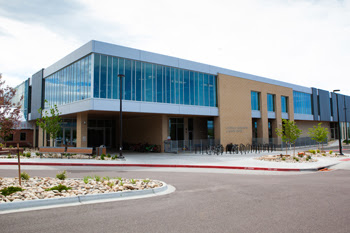 |
Stop by the Louisville Recreation Center for a family-friendly and interactive event to learn what you can do as we work toward a safer and more resilient Louisville. Hosted by Fire Smart Louisville, Louisville Fire Protection District, Wildfire Partners, and Boulder Watershed Collective. Join the Boulder Office of Disaster Management to increase your personal preparedness! During this 90-minute workshop you'll learn about Boulder County's hazards, emergency alerts, personal risk assessment, and create your own disaster preparedness plan! Join the Boulder Office of Disaster Management to increase your personal preparedness! During this 90-minute workshop you'll learn about Boulder County's hazards, emergency alerts, personal risk assessment, and create your own disaster preparedness plan! |
|
Wildfire preparedness: A shared responsibilityBecoming a wildfire-resilient community requires all of us to work together. Individual efforts are most impactful when everyone is participating, and when there is partnership between local government and public safety organizations, and the communities we serve. What you can doFirst things first: sign up for alertsDo you know how you would get an order to evacuate? If you answered no... RUN, don't walk, to BOCOAlert.org. BOCO Alert is how you will receive notices of emergencies impacting you, your home, or your business. If you're already signed up for BOCO Alert, take a moment to log in and make sure all of your info is up to date. |
|  |
Create an evacuation planWhen community evacuations are deemed necessary, local officials may notify you using one or more of the emergency alert methods used in Boulder County. Your evacuation plan should include at least two types of transportation you could use, multiple routes you could take, and where you would stay or meet up with loved ones. Build your grab listA grab list is an outline of irreplaceable or critical items that you would want to take with you during an evacuation. Use the 7 P’s as your guide to building your list: People, Pets, PC's & Phones, Prescriptions, Papers, Plastic, and Pictures. Mitigate your propertyMitigation is your best bet at your home and property withstanding a wildfire. There are many resources for mitigation in Boulder County, including support and rebate programs. Check out WildfirePartners.org for mitigation resources and get up to $500 back for mitigation work on your property. What the City is doing |
| Juniper ban & defensible space landscaping standards in Marshall Fire rebuild areaCouncil recently passed two emergency ordinances to increase our resilience as a community in the event of a wildfire: one prohibits new plantings of junipers, a highly flammable non-native plant, citywide. The other creates new defensible space landscaping standards in the Marshall Fire rebuild area. Learn more at LouisvilleCO.gov/FireHardening. |
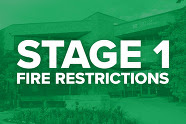 |
| Alignment with Boulder County fire restrictionsOn March 24, City Council adopted a resolution to align the City’s fire restrictions with those of Boulder County. Now, when Boulder County implements fire restrictions for the unincorporated area adjacent to Louisville, Louisville will automatically implement the same. This makes it easier for residents and the Louisville Fire Protection District to know which stage of fire restrictions are in place for Louisville and when they are in effect. As a reminder, Louisville — along with the entirety of Boulder County — is currently under stage 1 fire restrictions. |
 |
| Establishing a Wildland Urban Interface codeOn April 7, City Council adopted a new Wildland-Urban Interface (WUI) code to meet State requirements and strengthen the community’s protection against wildfire risk. The code establishes standards for fire-resistant building materials and defensible space around homes, primarily in areas near open space and where future development is expected, including west of McCaslin Boulevard. This effort is part of the City’s ongoing work to improve wildfire resilience community-wide. |
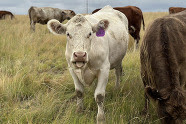 |
| Open Space Wildfire MitigationThroughout the year, our Open Space division implements recommendations from the 2023 Wildfire Risk Assessment to reduce wildfire risk in our open spaces. One of those tools is cattle and goat grazing. Grazing helps reduce grassland fuels, limit ladder fuels in the understory, control noxious weeds, and support the long-term health of our ecosystems by increasing nutrient cycling. You'll see cows grazing on Davidson Mesa Open Space starting this May! |
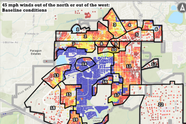 |
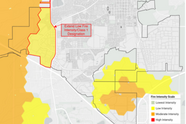
| Wildfire Conflagration Risk AssessmentThe Louisville Fire Protection District (LFPD) teamed up with the Ember Alliance to improve our understanding of fire behavior in the urban and suburban environments. The Wildfire Conflagration Risk Assessment (WCRA) report includes details about the modeling and risk measures assessed all to help identify actionable methods to reduce risk of structure ignition. The City is partnering with LFPD to implement recommendations outlined in the WCRA. |
|
|
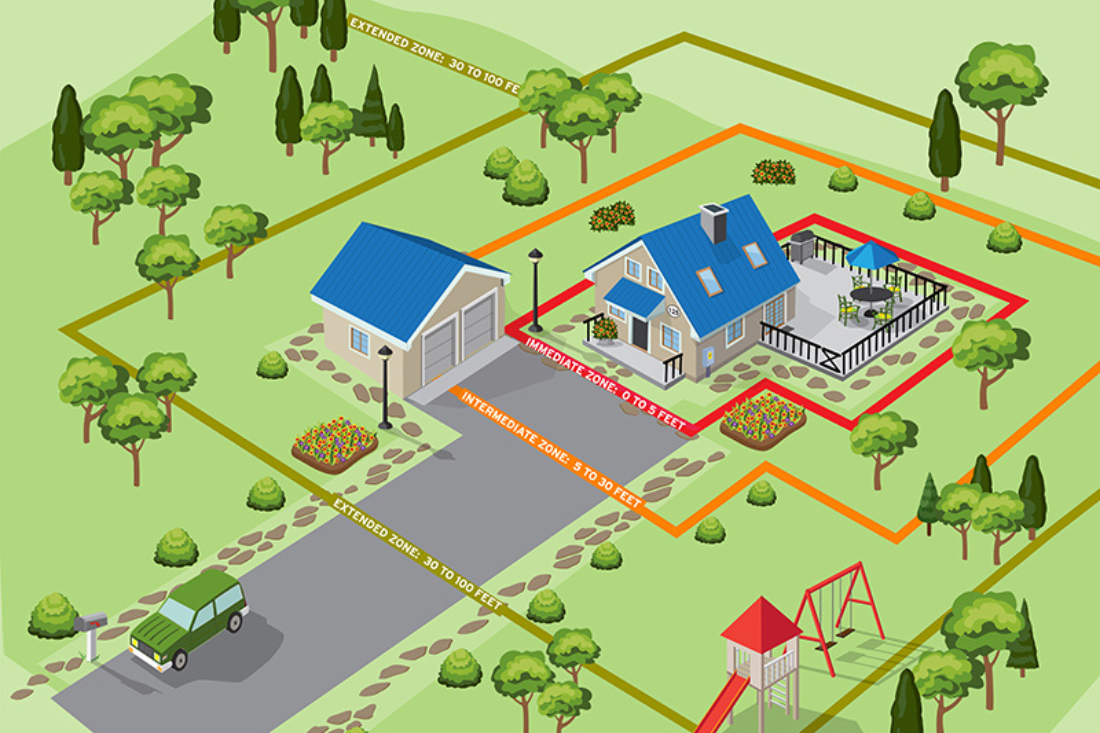 Wildfire Mitigation BasicsThe Home Ignition Zone (HIZ) is the area that includes your house and the surrounding defensible space. Science has shown that the conditions within 100 feet of a home will determine whether or not the structure can survive a wildfire. Creating a robust HIZ involves both home hardening and developing effective defensible space. Wildfire Partners has created step-by-step guides to creating and maintaining your HIZ, including simple swaps you can make to harden your home and install wildfire-resistant landscaping. Harden your homeHome hardening is the process of making your existing home and accessory structures as fire resilient as possible through home retrofits and strategic maintenance. Simple do-it-yourself home swaps you can make today include: - Cover or replace any vent that isn‘t exhausting gases and has mesh/gaps over 1/8“ wide with 1/8" metal screen mesh that is corrosion resistant and noncombustible. This is also known as metal screening or hardware cloth and is available at most hardware/home improvement stores.
- Retrofit the bottom six or more inches of your siding with a noncombustible material like metal flashing or fiber cement trim board.
Home Hardening 101 Create Defensible Space Creating Defensible Space entails modifying the natural and introduced vegetation around your home to reduce fire hazard. This creates separation – both vertical and horizontal – between potential fuel sources like between trees and grasses or between grasses/shrubs and houses. You can create Defensible Space today by: - Create a noncombustible zone around your home by removing all vegetation (grass, bushes, trees) and any combustible material within five feet from the structures’ walls.
- Cover the noncombustible zone with 3/4″ crushed stone (recommended) or gravel to a depth of at least two inches. Other noncombustible material like flagstone, brick, or concrete is also suitable.
- Junk your junipers! Junipers are highly combustible and should be removed from your property, especially close to your home.
Defensible Space 101 These are just a few examples of things you can do to start preparing your home for wildfires. The Colorada State Forest Service has published a comprehensive guide that explores home hardening and defensible space in detail. We encourage you to check it out and visit WildfirePartners.org for fact sheets, step-by-step guides, and more. Thinking of some home upgrades this spring?If you're considering building an ADU, building or replacing a fence, adding a deck, or replacing your roof this season... make sure you check out the Fire Hardening Code, and pass along to your contractor. Certain new construction, repairs, and replacements must comply with the Fire Hardening Code. Visit LouisvilleCO.gov/FireHardening for more info, or check out our Fire Hardening Code checklist below. 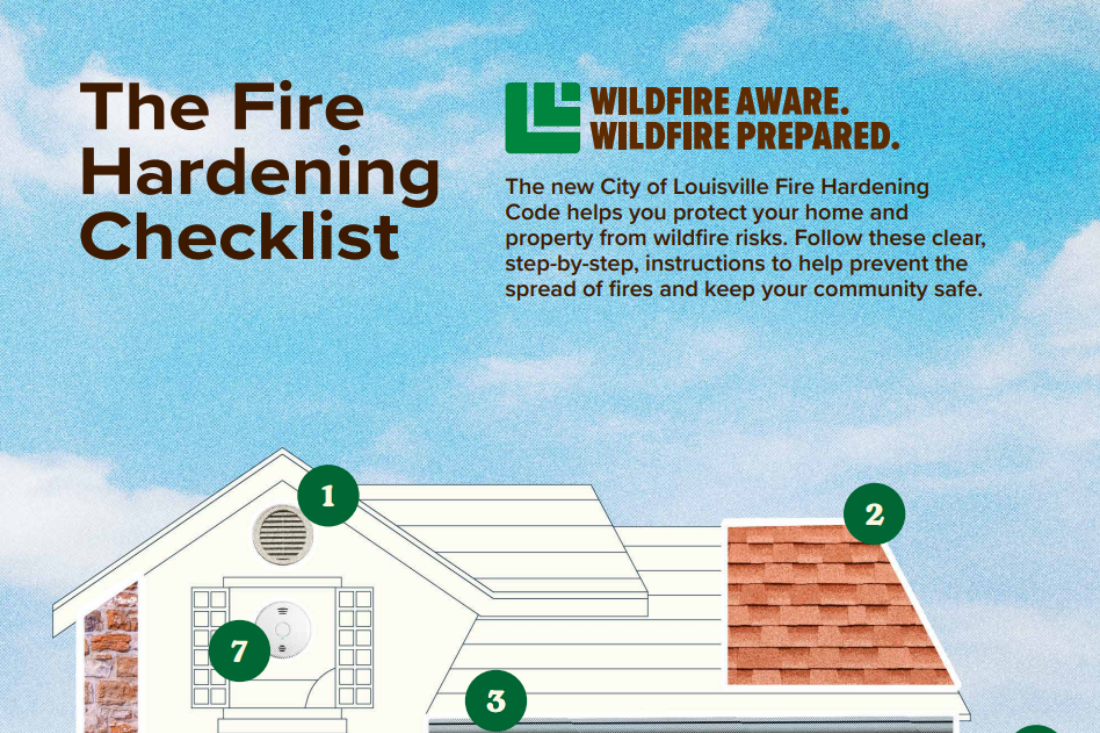 |
|
|
|
|